Beat the Heat: Essential Summer Safety Tips for Your Pets
Crosspoint Veterinary Hospital, Covington, Louisiana
August 2026
Longer days, beach trips, and outdoor barbecues make summer a favorite season for many of us. But while we’re enjoying the sunshine, our pets are navigating a world designed around human thermal tolerances—and their cooling systems aren't nearly as efficient as ours.
Dogs and cats don't sweat through their skin the way we do; they rely primarily on panting and minimal heat dissipation through their paw pads. When the temperature spikes, heat-related emergencies can escalate in a matter of minutes. Here is what every pet parent needs to know to keep their four-legged family members safe, comfortable, and healthy this summer.
1. Preventing Heatstroke: Spot the Warning Signs Early
Heatstroke (hyperthermia) occurs when a pet's body temperature rises dangerously high—typically above 103°F (39.4°C), with temperatures over 105°F (40.5°C) constituting a medical emergency.
High-Risk Pets
While any animal can suffer from heat exhaustion, extra caution is needed for:
- Brachycephalic breeds: Short-snouted dogs and cats (Pugs, Bulldogs, Boxers, Persians) struggle to move air efficiently through their nasal passages.
- Senior pets and puppies: Young and older animals have less stable thermoregulation.
- Overweight or thick-coated breeds: Extra insulation traps internal heat rapidly.
Early Warning Signs vs. Advanced Distress
- Early stage: Excessive or frantic panting, bright red gums and tongue, heavy drooling, and unwillingness to keep moving.
- Advanced stage: Pale or bluish gums, lethargy, vomiting, confusion, pinpoint bruising on the gums, collapse, or seizures.
If you suspect heatstroke, act immediately before driving to the vet clinic:
• Move your pet into the shade or an air-conditioned room.
• Apply cool (not cold or icy) water to their belly, armpits, and paw pads. Using ice water causes blood vessels to constrict, trapping heat inside the core.
• Place a fan nearby to encourage evaporative cooling.
• Transport them to the nearest emergency veterinary facility right away, even if they seem to be recovering. Internal tissue damage can occur without obvious external symptoms.
2. Hot Pavement: Protecting Sensitive Paw Pads
Asphalt and concrete absorb solar radiation all day, acting like heat sinks. On a sunny 85°F day, asphalt can easily reach 130°F or more—hot enough to cause second-degree burns on sensitive paw pads in under 60 seconds.
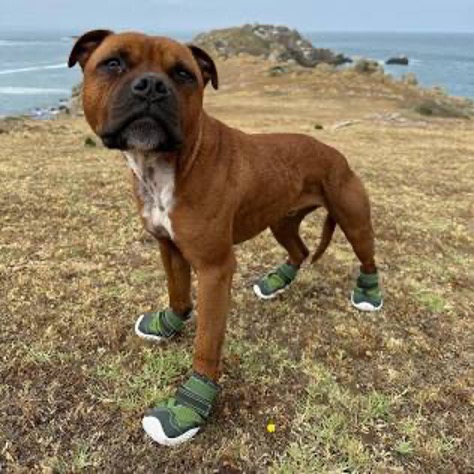
Protective booties keep paw pads safe on hot terrain. Source: Spark Paws
The 7-Second Rule
Before taking your dog out for a walk, test the ground with the back of your bare hand:
• Press your hand firmly against the pavement for 7 consecutive seconds.
• If it’s too hot for your hand, it’s too hot for their paws.
Simple Paw Safety Strategies
• Shift your schedule: Walk during the early morning or late evening when surfaces have cooled down.
• Stick to grass: Route your walks through grassy parks or shaded trails rather than concrete sidewalks.
• Invest in protective footwear: Well-fitted, breathable dog booties provide a solid barrier against high ground temperatures and sharp debris.
3. Water Safety: Swimming Pools, Lakes, and Oceans
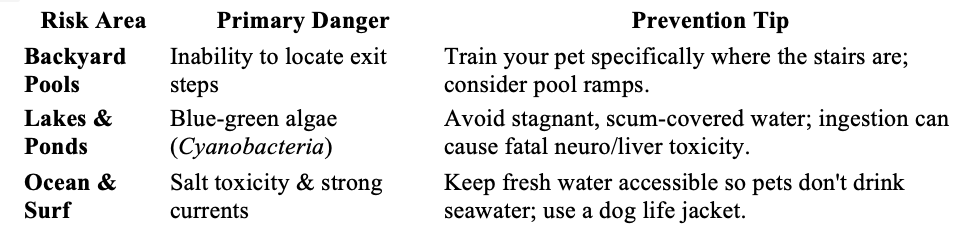
It’s a common myth that all dogs are natural-born swimmers. While some breeds take to the water effortlessly, many sink quickly or exhaust themselves in open water.
Golden Rules for Water Safety
- Use a pet life jacket: Even strong swimmers benefit from a flotation device equipped with a top rescue handle—especially when boating or navigating currents.
- Rinse off after every swim: Chlorine, salt, and lake microorganisms can cause skin irritation or stomach upset if licked off the fur later.
- Watch for water intoxication: Dogs that bite at waves or obsessively fetch toys underwater can ingest large amounts of water, leading to dangerous electrolyte imbalances (hyponatremia). Limit water fetch sessions to short intervals.
Quick Summer Checklist for Pet Parents
[ ] Fresh, cool water available indoors and outdoors at all times.
[ ] Never leave a pet unattended in a parked car, even with windows cracked.
[ ] Sunscreen (pet-safe only!) applied to exposed skin or light-furred ears and noses.
[ ] Flea, tick, and heartworm preventatives kept up to date.